Market Analysis: High Quality Cap Assembly Machine Factory Trends and the Shift Toward Complete Turnkey Integration
YUYAO, ZHEJIANG, CHINA, October 20, 2026 /EINPresswire.com/ -- Packaging automation is undergoing a quiet but
Press Release Disclaimer: This is a press release distributed through the XPR Media network. It has not been independently verified by our newsroom.
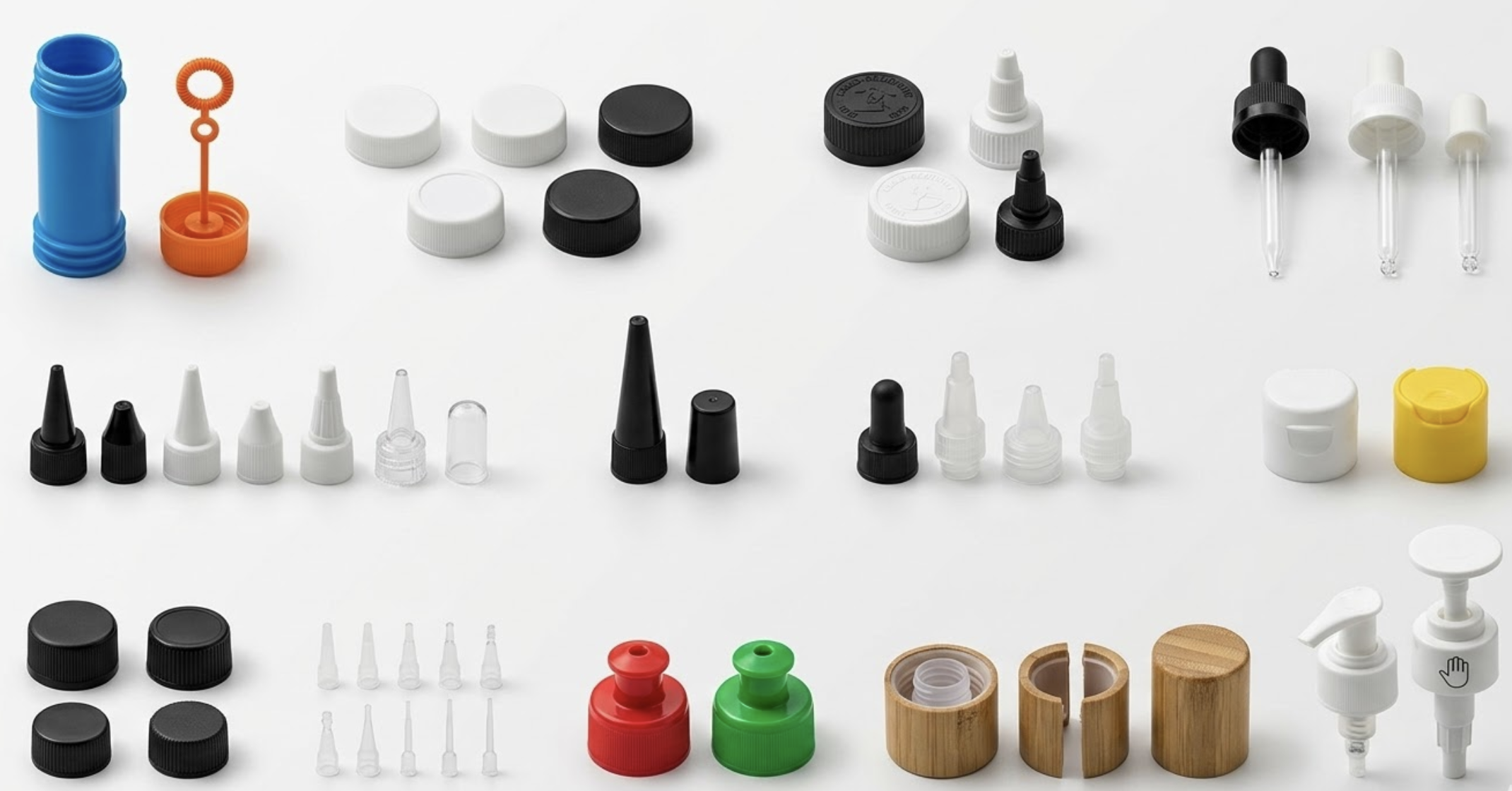

YUYAO, ZHEJIANG, CHINA, October 20, 2026 /EINPresswire.com/ — Packaging automation is undergoing a quiet but significant transformation. Across cosmetics, food processing, daily chemical, and toy manufacturing sectors, procurement priorities are shifting. Speed and unit price no longer define the buying decision alone. Instead, manufacturers increasingly demand application-specific assembly solutions built around their exact cap geometry and production context. This evolving expectation is fundamentally changing what a High Quality Cap Assembly Machine Factory must deliver — not just capable standalone equipment, but engineering depth, cross-industry adaptability, and complete integration capability from a single source.
The driving force behind this shift is straightforward: product portfolios are growing more complex, and cap structures are following suit.
Component Count Inflation: Why Caps Are Getting Harder to Assemble
A decade ago, most bottle cap assembly challenges centered on 2-piece or 3-piece configurations. Today, active product lines across cosmetics, food, and daily chemical sectors routinely require 4-to-6-piece cap sets — a complexity increase that multiplies alignment tolerances, required detection stations, and assembly cycle time proportionally.
The Cosmetic Bottle Cap Assembly Machine (model HG-070) from Ningbo Huagong Automation Technology Co., Ltd. handles 3-piece all-plastic cosmetic cap sets — inner cap, outer cap, and gasket — used in lotion, cream, and serum bottles. At 30 to 40 pieces per minute, it delivers rotary assembly with plus or minus 0.1mm accuracy, online detection for missing components, misalignment, and incomplete pressing, with automatic rejection of defective units. The Pepper Bottle Cap Assembly Machine (model HG-6080) raises the complexity level further. It assembles 5-piece condiment cap sets — inner stopper, valve core, gasket, top cap, and outer shell — using five independent vibratory feeders and maintaining a yield rate above 99%. Then there is the Toy Bubble Water Bottle Cap Assembly Machine (model HG-5020), running at 140 to 160 pieces per minute with automatic blower orientation correction — a function that directly addresses the leakage and misalignment problems specific to toy bubble solution bottles.
These are not incremental product updates. They represent a structural escalation in what assembly automation must handle.
Industry Cross-Pollination — When Daily Chemical Technology Moves Into Food and Toy Markets
One of the more analytically interesting trends in this market is technology transfer across industries. Assembly techniques developed and refined for daily chemical packaging — where sealing integrity, throughput consistency, and multi-component feeding have long been engineering priorities — are now being adapted to serve food, condiment, and toy sectors.
The Toy Bubble Water Bottle Cap Assembly Machine explicitly builds on mature daily chemical cap assembly technology to resolve toy-industry-specific pain points. The Pepper Bottle Cap Assembly Machine applies the same rotary structure and intelligent detection logic used in cosmetic packaging to a condiment context previously dominated by manual labor. This pattern of cross-sector adaptation signals that leading cap assembly factories are no longer single-vertical specialists. Rather, they function as platform builders — deploying transferable engineering foundations across diverse application environments.
For manufacturers in adjacent industries still relying on manual assembly or early-generation equipment, this trend opens access to precision automation that was previously unavailable at commercially viable price points.
The Intelligence Layer — How PLC Recipe Storage Is Redefining Flexibility
Beyond mechanical assembly capability, embedded control intelligence is reshaping the competitive landscape. Modern cap assembly machines now incorporate PLC touchscreen interfaces with recipe storage and one-touch formula switching. This means a single machine can accommodate multiple product specifications — different cap diameters, component counts, or material tolerances — through parameter recall rather than mechanical reconfiguration.
The practical implication for multi-SKU producers is significant. Changeover downtime, which historically inflated the true cost of short-run production, shrinks substantially when operators retrieve stored recipes rather than rebuilding machine settings from scratch. Variable frequency speed control adds another layer of adaptability, allowing production managers to modulate output rates in response to downstream bottlenecks or upstream supply variation. Across Huagong Automation’s cap machine range — from the 3-piece cosmetic model to the 5-piece condiment configuration — this control architecture appears consistently, suggesting a deliberate platform approach rather than machine-by-machine feature additions.
Agility, in this context, becomes a factory-floor competitive asset.
The Turnkey Integration Imperative — Why Single-Machine Procurement Is Losing Ground
The shift toward intelligence and cross-industry adaptability is accelerating a parallel trend at the procurement level: manufacturers are moving away from sourcing individual machines from multiple vendors. Single-source integration — where one factory designs, builds, commissions, and supports an entire assembly ecosystem — is gaining ground across the packaging automation sector.
The operational reasons are practical. Unified technical standards across all machines simplify maintenance scheduling and reduce the diagnostic complexity that arises when equipment from different manufacturers shares a production line. Coordinated spare parts logistics — where a single supplier manages EMC express delivery for all critical components — eliminates the lead time uncertainty that multi-vendor setups typically generate. Integration risk also concentrates in one accountable party rather than dispersing across several suppliers with misaligned incentive structures.
Huagong Automation’s stated scope of business reflects this integration orientation directly. Beyond individual cap assembly machines, the company’s capabilities extend to complete production line design and manufacture, non-standard equipment development based on client-specific requirements, localization of imported equipment, and custom power machinery development. This positions the factory as an engineering partner capable of designing around a client’s specific floor plan, upstream process, and output target — rather than simply fulfilling a product catalog order.
What Distinguishes a Factory-Grade Integration Partner From an Equipment Reseller
Not every supplier offering cap assembly machines operates with genuine integration depth. The market distinction between factory-grade integration partners and catalog resellers has become more significant as buyer requirements grow more complex.
Factory-grade partners hold in-house R&D capability, documented multi-patent product lines, and verifiable cross-industry deployment history. Huagong Automation earned High-Tech Enterprise certification in 2024 and holds ISO 9001 and EU CE certification. In the cap assembly market specifically, the more operationally relevant differentiator is pre-sales process depth: free sample testing with actual client cap components validates machine performance before design is finalized — a step that catalog resellers typically cannot offer. Non-standard customization capability, documented through an engineering pre-sales workflow rather than just claimed in sales materials, is the practical test that separates factory-grade integration partners from distributors.
Resellers, by contrast, typically lack the engineering resources to handle non-standard specifications, manage post-installation modifications, or provide meaningful technical input during the design phase. The gap between these two supplier profiles becomes most visible when a production challenge requires problem-solving rather than catalog browsing.
Market Outlook — Where Cap Assembly Automation Heads Next
The convergence of rising labor costs, expanding SKU diversity, tightening quality regulations across food and cosmetics categories, and growing buyer preference for turnkey partnerships points toward sustained demand growth for intelligent, application-specific cap assembly solutions. Manufacturers investing in factory partners with broad product portfolios and genuine non-standard capability are better positioned to manage future production complexity. The key procurement signal: a factory-grade partner’s after-sales commitments should be contractually specified — not just cited in marketing materials — covering response time, spare parts logistics, and warranty scope for each machine category.
The market is moving toward integration. Factories that can deliver it, end-to-end, are increasingly the ones setting the terms of competition.
For full product specifications and integration consultation, visit https://www.hgautomachine.com/.
Ningbo Huagong Automation Technology Co., Ltd.
Ningbo Huagong Automation Technology Co., Ltd.
Legal Disclaimer:
EIN Presswire provides this news content “as is” without warranty of any kind. We do not accept any responsibility or liability
for the accuracy, content, images, videos, licenses, completeness, legality, or reliability of the information contained in this
article. If you have any complaints or copyright issues related to this article, kindly contact the author above.

Media gallery