Brigham Property Rights Law Firm Releases Preview of Supreme Court Oral Argument in Natural Gas Act Takings Case
Property Rights Matter: In Leonard W. Hoffman v. WBI Energy Transmission, Inc., the firm argues that pipeline companies
Press Release Disclaimer: This is a press release distributed through the XPR Media network. It has not been independently verified by our newsroom.

Jacksonville, FL, Nov. 04, 2026 (GLOBE NEWSWIRE) — Brigham Property Rights Law Firm, counsel for amici curiae Florida property owners in Leonard W. Hoffman v. WBI Energy Transmission, Inc., has released a preview of the U.S. Supreme Court’s oral argument in the case. The dispute concerns North Dakota ranchers whose property was taken for a 12-mile segment of an interstate natural gas pipeline. At issue is whether the pipeline company must reimburse landowners for attorney’s fees and litigation costs when state law provides for that compensation. The firm argues that state law should govern when it affords greater protection to property owners.
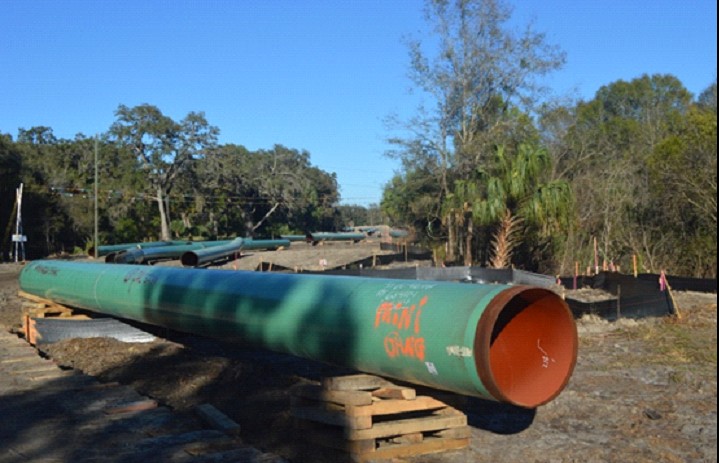
Sabal Trail Natural Gas Pipeline (36 inch diameter pipe having capacity to transmit 1 billion cubic feet per day)
For over forty years, federal courts have been applying state laws in Natural Gas Act takings cases which often afford greater protection of private property rights than does the federal baseline which flows from the U.S. Constitution’s Fifth Amendment. In defining property rights, states may, through their own constitutions and statutes, check and balance the eminent domain power by requiring that condemning authorities pay for landowners’ attorney’s fees and costs.
And, here, landowners need protection as the companies taking easements rarely consider an easement’s use for powerlines or pipelines causing any severance damages to the landowner’s remaining property resulting from proximity, market fear, or stigma. Pipeline companies routinely contend that because their pipelines are buried underground, there are no severance damages because such use is out-of-sight and out-of-mind. Landowners disagree and contend that such easements are actually regarded in the marketplace as being a type of NIMBY (“Not-In-My-Backyard”) use and that the market value of their real estate is discounted when property is encumbered by such an easement. But too often, might makes right as landowners must litigate with billion-dollar energy concerns that have almost unlimited resources to spend on litigation.
Over twenty years ago, in another important case concerning eminent domain, the U.S. Supreme Court decided to allow private property to be taken for economic development in a case styled Kelo v. City of New London. In that case, homeowner Susette Kelo fought against the taking of her little pink house because eminent domain was being used to transfer the title of her home to a private developer. Instead of protecting Kelo’s civil right of private ownership, the Court looked the other way, giving deference to the local government definition of public purpose. The decision, to put it mildly, was universally condemned. Most were outraged that the Court abdicated its role of interpreting law and thereby limiting the use of eminent domain. The Court’s decision in Kelo stirred up a property rights revival nationwide where many states adopted reforms to both state constitutions and statutes protecting private property rights. Accordingly, in some states, the measure of compensation under state law obliges the condemning authority to pay a landowner’s attorney’s fees and costs.
In Leonard W. Hoffman v. WBI Energy Transmission, Inc., the pipeline company argues that, because it is using the federal power of eminent domain, it should be treated just as if it were the United States government, where, in condemnation cases when it is the federal government taking private property, the Fifth Amendment has been interpreted to not oblige government to reimburse landowners’ attorney’s fees and costs. The landowners, instead, argue that the U.S. Supreme Court should follow the precedent which has been established for over forty years in the Third, Fifth, Sixth, and Eleventh Circuits, where, under principles of federalism, because there is no federal objective or program that is frustrated, the private licensee company that decides to further its commerce in a particular state with the construction of an interstate pipeline should follow the law of the state in taking pipeline easements from landowners in that state. Consequently, if state property law provides that the measure of compensation includes payment of landowners’ attorney’s fees and costs, then the pipeline company is obligated to reimburse the landowners.
Given that private licensee pipeline companies are not accountable to the public, but instead answer to shareholders in maximizing profits, landowners need protection. If state law affords greater protection for private property rights, then the U.S. Supreme Court should decide this case for landowners.
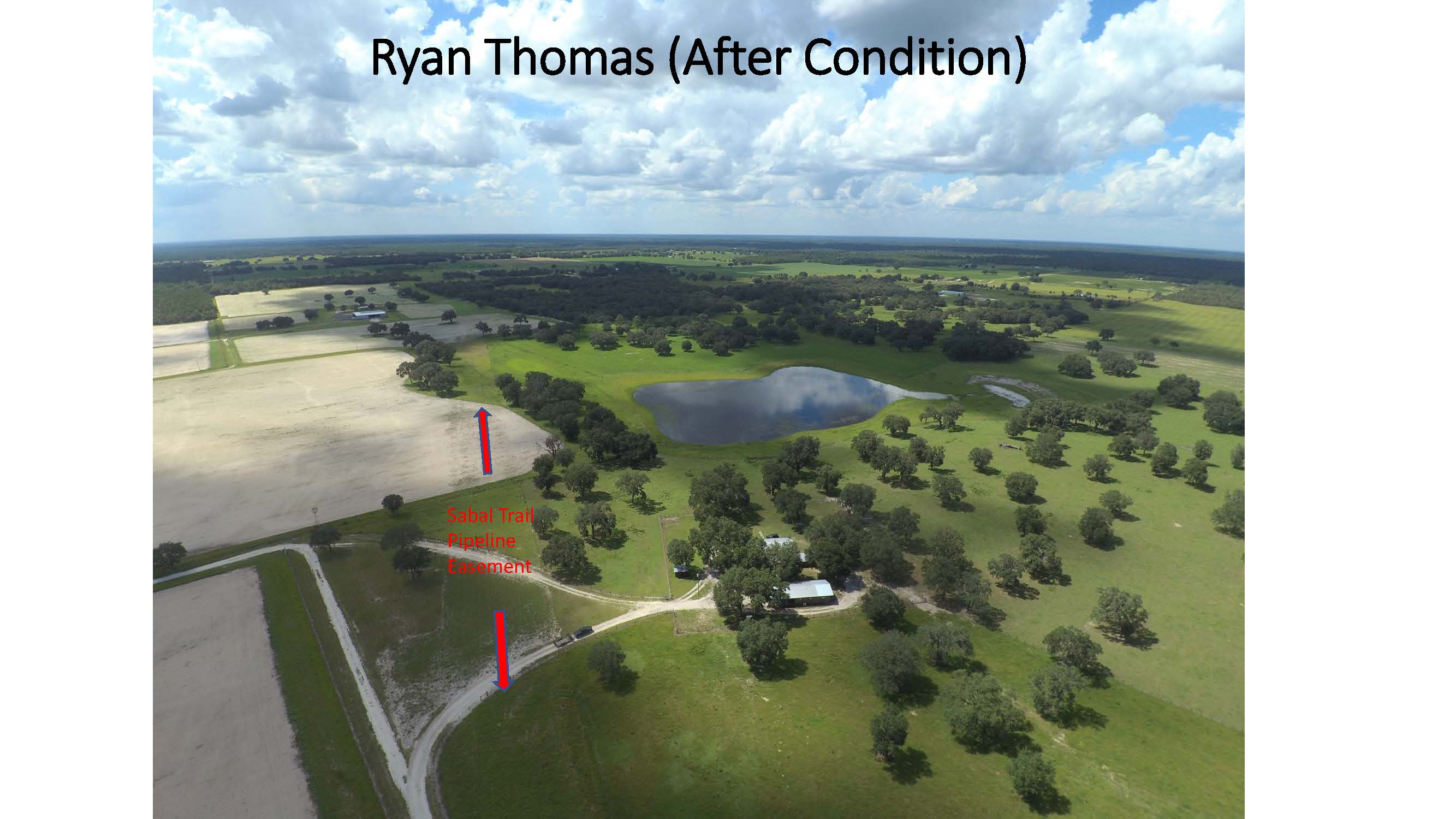
In Florida, Sabal Trail Transmission, Inc. filed eminent domain cases to acquire easements over a route of 247 miles for its new interstate pipeline through Florida.
Press Inquiries
Andrew Prince Brigham
BRIGHAM PROPERTY RIGHTS LAW FIRM, PLLC
Counsel for Amici Curiae Florida Property Owners Ryan Thomas, Lee Thomas Trust, and Sunderman Groves, Inc. in Leonard W. Hoffman, et al v. WBI Energy Transmission, Inc. (Case No. 25-159)
abrigham [at] propertyrights.com
https://propertyrights.com