
Paying for a parent’s long-term care is the focus of Ellen Markham’s new guide
Just another WordPress site
Press Release Disclaimer: This is a press release distributed through the XPR Media network. It has not been independently verified by our newsroom.
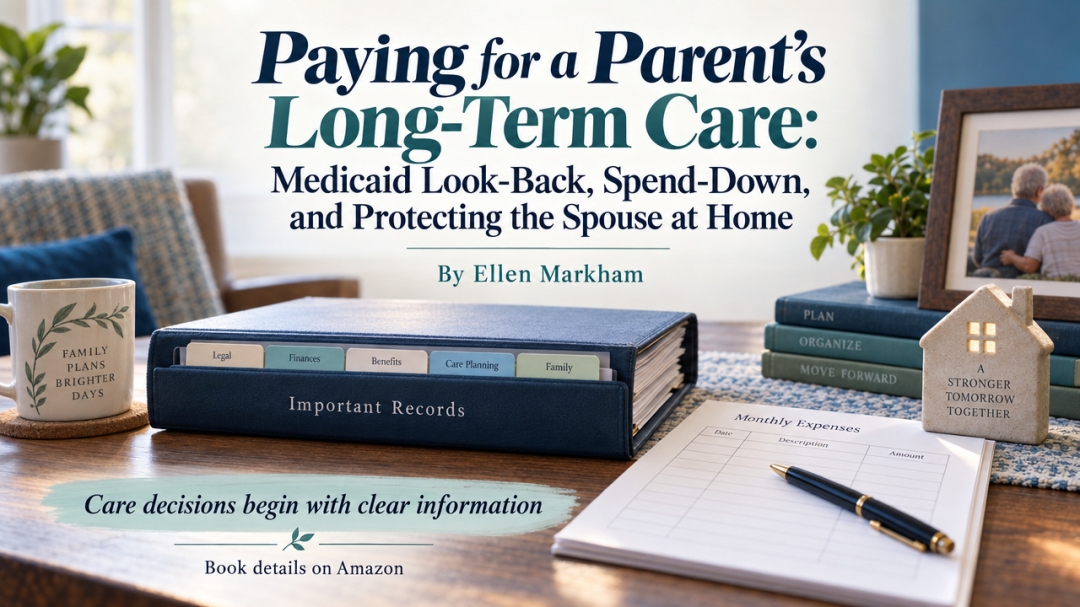

HOUSTON, TX – Nov. 18, 2026 – Ellen Markham’s new book, paying for a parent’s long-term care: Medicaid Look-Back, Spend-Down, and Protecting the Spouse at Home, addresses the practical questions that arise when an older parent needs ongoing care. Published November 16, 2026, the guide centers on a clear reader benefit: helping families organize the facts, responsibilities, and records involved in paying for a parent’s long-term care before making financial decisions that may be difficult to reverse.
The book begins with a situation many families must navigate under pressure: a parent is leaving the hospital, and relatives need both a safe care plan and a way to pay for it. Rather than starting with a financial maneuver, Markham’s approach begins with care needs and moves through coverage, decision-making authority, Medicaid eligibility, and documentation. That sequence gives adult children, spouses, and other relatives a framework for deciding which questions need attention first.
A running fictional example connects these topics to family life. After Frank Delgado falls and is hospitalized, his wife, Rosa, and their adult children, Elena and Marcus, face decisions about care settings, household finances, and shared responsibilities. Their circumstances illustrate the competing demands of supporting one parent while considering the daily needs of the other. The family is an educational example, not a testimonial or a report of an actual eligibility outcome.
One of the guide’s central tools is a family snapshot. It brings together the recommended care setting, expected discharge timing, professional contacts, income, routine expenses, assets, and recent financial changes. The purpose is to establish a common factual starting point rather than allow relatives to work from different assumptions. The book also separates the spouse’s household and medical expenses so those needs remain visible alongside the costs of the parent’s care.
The coverage discussion addresses a foundational question: Does Medicare pay for ongoing custodial care? The guide distinguishes skilled services from ongoing help with everyday activities and explains that Medicare is not a general payment source for continuing custodial care. It directs attention to the remaining care needs when skilled coverage ends, the available payment options, and the importance of written notices and clinical documentation. This distinction helps frame the family’s next questions without suggesting that every care setting or payment program follows the same rules.
Legal authority is another early priority. The book distinguishes the relative who coordinates appointments and paperwork from the person authorized to manage money or make health care decisions. Its discussion includes powers of attorney, health care documents, and the practical work of making those documents available to institutions. Family organization and legal permission are treated as separate matters, helping readers recognize why willingness to help is not, by itself, authority to sign.
For Medicaid planning, the guide organizes eligibility around medical need, income, and assets. It examines account ownership, access to funds, and the records needed to explain financial circumstances. Rather than presenting a single eligibility formula for every reader, it emphasizes state rules and the need to identify the correct long-term care program. This approach carries through to the book’s treatment of joint accounts, trusts, annuities, and situations requiring professional advice.
What does Medicaid’s five-year look-back examine? The book describes a review of financial transfers, including gifts and other transactions that may involve giving away value rather than receiving equivalent value in return. Family gifts, ownership changes, and payments to relatives are among the subjects discussed. Its emphasis is on reconstructing an accurate transaction history with existing records and obtaining advice about potential problems—not assuming that an ordinary family transaction is automatically harmless for eligibility purposes.
The spend-down chapters make documentation part of the decision itself. A spending log connects each payment with its date, amount, recipient, purpose, payment method, and supporting evidence. Readers encounter a distinction between spending for documented needs and giving money away. The guide also cautions against treating movements between accounts as a solution to eligibility questions. Its practical focus is traceability: records should explain what happened and why, rather than leave a family searching for answers after an application raises questions.
The spouse remaining at home receives sustained attention. The book discusses resource and income allowances alongside household expenses, ownership details, and the records used to support a couple’s planning. A worksheet provides a way to organize those issues without replacing an official state calculation. The house is considered separately through home-related eligibility questions, estate recovery, and the potential consequences of a hurried deed transfer. These discussions reinforce the book’s emphasis on understanding a decision before changing ownership.
The guide extends beyond the initial application. It covers questions for care facilities, organizing application documents, maintaining monthly records, renewals, and reporting changes. A dated state reference and a one-page family plan bring the work together. The plan identifies decision-makers, backups, and responsibility for financial and medical records, giving relatives a shared reference for continuing tasks rather than treating approval as the end of the process.
Paying for a Parent’s Long-Term Care provides general educational information about United States long-term care planning; it is not legal, financial, tax, or medical advice. It emphasizes confirming current requirements with the relevant state Medicaid agency and consulting a qualified elder law attorney before consequential financial or property decisions. The book does not promise Medicaid approval or a universal strategy. Its central contribution is a structured way to prepare questions, organize evidence, and coordinate family responsibilities. Book information is available at https://www.amazon.com/dp/B0HRSYYWB5. Additional book information is available through Book website.
About Ellen Markham
Ellen Markham is the author of Paying for a Parent’s Long-Term Care: Medicaid Look-Back, Spend-Down, and Protecting the Spouse at Home. Her book addresses family care planning, payment questions, legal authority, Medicaid eligibility, and recordkeeping in the United States. Through a fictional family example, worksheets, and checklists, it emphasizes organized information, state-specific requirements, and circumstances that call for professional advice.
Video Link: https://www.youtube.com/embed/-o_EYsFvJfE
Media Contact
Company Name: Paying for a Parent’s Long-Term Care
Contact Person: Ellen Markham
Email: Send Email
Phone: 713-392-6222
Address:450 N Sam Houston Prky E Ste 103
City: Houston
State: Texas
Country: United States
Website: https://oiz4fd8wetf1oh6apb17pdtl.macaly.app
Press Release Distributed by ABNewswire.com
To view the original version on ABNewswire visit: Paying for a parent’s long-term care is the focus of Ellen Markham’s new guide

